

Updated on 17th March 2026
Curtains for bay windows can feel like a puzzle. You’ve got the angles, the depth, the curves, and if you live in a period property anywhere across South Wales (from the elegant terraces of Penarth to the Victorian villas of Swansea), you’ll know that bay windows are one of the most beautiful features your home has to offer. The trick is dressing them properly.
Getting bay window curtains right means balancing form with function. You want something that looks stunning and suits the architecture, but you also need practical light control, insulation (especially through those Welsh winters), and a bit of privacy when the evenings draw in.
This guide covers everything you need to know about choosing curtains for bay windows. We’ll walk through the different styles available, from classic pencil pleat to sleek motorised options, and share practical tips on measuring, fabric selection, colour choices, and installation. Whether you’re refreshing a living room, updating a bedroom, or starting from scratch in a new build, you’ll find what you need here.
So grab a cuppa, and let’s get into it.
What are Bay Windows?
Bay windows project outward from your home’s main walls, creating a recessed nook inside the room. They’ve been a staple of British architecture since the Renaissance period, and they’re particularly common across South Wales, where you’ll find them in everything from Edwardian semis to modern new-builds. As Historic England notes, many of these windows form part of listed or conservation properties, so understanding their heritage is important when planning any changes.
There are three main types you’ll come across. Box bay windows have sharp 90-degree angles and a flat front. Angled bay windows (sometimes called canted bays) sit at more gentle angles, typically 30 or 45 degrees. These canted bays were especially popular during the Victorian era, becoming a defining feature of terraced and semi-detached homes across the UK. Bow windows curve outward in a smooth arc and tend to feature in grander period properties.
Each type presents its own set of challenges when it comes to curtains for bay windows. The angles, the depth of the recess, and even the position of radiators underneath all influence which styles and hanging methods work best. That’s why off-the-peg solutions rarely do the job properly, and it’s worth taking time to plan your approach.
Bay windows also let in considerably more light than standard flat windows, thanks to their multi-pane design and wider span. That’s a real bonus, but it also means you need curtains that can manage brightness throughout the day without swamping the room when they’re drawn back.

Why Does Your Curtain Choice Matter So Much for Bay Windows?
Choosing the right curtains for bay windows isn’t just about picking a nice fabric and hoping for the best. Your bay window is likely one of the biggest visual features in the room, so the curtains you hang there set the tone for the whole space.
Here’s what’s really at stake.
Aesthetic Harmony and Room Flow
Curtains are one of the first things people notice when they walk into a room. The right pair ties the whole design together, from the wall colour to the furniture. The wrong pair can make even a beautifully furnished room feel disjointed. For bay windows specifically, the curtain style either frames the architectural feature or fights against it.
Light Control and Privacy
Bay windows let in a lot of natural light, which is wonderful. But there are times you need to dial it back, whether it’s a sunny afternoon causing screen glare or an evening when you’d rather not give the neighbours a show. Sheer curtains paired with heavier drapes give you flexibility throughout the day. If your bay window faces a busy street in Cardiff or Bridgend, privacy becomes an even bigger consideration.
Thermal Insulation and Energy Efficiency
Here’s something people don’t always think about: curtains for bay windows can make a real difference to your energy bills. According to the Energy Saving Trust, homes can lose up to 25% of their heat through windows and doors. Thick, lined curtains act as an extra layer of insulation, keeping warmth in during winter and blocking heat in summer. It was found that thermally lined curtains can reduce heat loss through windows by up to 25%, and white-backed curtains can cut solar heat gain by as much as 33%. Properties across South Wales, especially older builds with single or early double glazing, benefit enormously from well-fitted, thermally lined bay window curtains.
Sound Dampening
If you live near a main road, a school, or any of the busier areas around Newport, Swansea, or the Vale of Glamorgan, heavier curtain fabrics can help reduce external noise. It won’t soundproof your room entirely, but it does take the edge off, creating a calmer, more comfortable living space.
Framing the View
One of the joys of a bay window is the panoramic view. When your curtains are drawn back, they should frame what’s outside like a picture, drawing the eye outward. Floor-length curtains that pool slightly on the ground can create a gorgeous, expansive feel, especially if your bay overlooks a garden or coastal view.
Personal Style and Expression
Your curtains say something about you. Bold prints, luxurious velvets, relaxed linens, or sleek minimalist sheers all tell a different story. The beauty of dressing bay windows is that you’ve got a generous canvas to work with, so you can really express your taste.
What Are the Best Curtain Styles for Bay Windows?
When it comes to bay window curtain ideas, there’s no single “right” answer. The best style depends on your room’s character, how you use the space, and what kind of look you’re after. Let’s break down the most popular options.
Pencil Pleat Curtains
Pencil pleat curtains are a classic for good reason. They feature tightly gathered folds at the top that resemble a row of pencils (that’s where the name comes from), and they offer a neat, tailored look that suits both traditional and contemporary rooms.
What makes pencil pleat curtains particularly good for bay windows is their adjustability. You can tighten or loosen the gathers to fit the varying widths of each section, which is a real advantage when you’re working with angled or curved bays. They work well on both curtain tracks and poles, giving you flexibility on how you hang them.
For period homes across South Wales, pencil pleat curtains in a rich fabric like cotton sateen or a subtle jacquard can look absolutely spot-on.
Eyelet Curtains
Eyelet curtains (also called grommet curtains) have a more modern feel. Metal rings punched into the top of the fabric thread directly onto the curtain pole, creating even, flowing folds that look clean and unfussy.
They’re brilliant for contemporary interiors and open smoothly along the pole, making them practical for daily use. One thing to keep in mind with eyelet curtains for bay windows is that they work best with curtain poles rather than tracks, so you’ll want to look into bay window curtain pole systems that bend at the correct angles for your window.
If you’re going for a sleek, pared-back look in a modern apartment or new-build, eyelet curtains in a textured linen or soft cotton are hard to beat.
Double Pinch Pleat Curtains
Double pinch pleat curtains sit somewhere between casual and formal. The fabric is pinched into pairs of folds at the top, creating a structured, elegant drape that feels considered without being stiff.
They’re a lovely choice if you want your bay window to feel polished and put-together. The pinch pleat heading works particularly well with medium-weight fabrics and looks great when combined with a matching or contrasting pelmet to hide the curtain track.
Triple Pinch Pleat Curtains
For a more formal, luxurious look, triple pinch pleat curtains are the way to go. Each pleat gathers the fabric into three folds, giving a rich, full appearance that’s ideal for larger bay windows and grander rooms.
These work beautifully in heavier fabrics like velvet, brocade, or thick textured cotton. If your bay window is in a dining room or formal sitting room, triple pinch pleat curtains in a deep jewel tone or classic neutral can create a genuinely show-stopping effect.
Motorised Curtains
Here’s where things get exciting for anyone who loves a bit of tech. Motorised curtains open and close at the touch of a button (or a voice command, if you’ve got a smart home setup). They’re especially useful for bay windows where the track runs through tight angles and manual operation feels like a bit of a wrestle.
Motorised curtains can be made in virtually any style, from pencil pleat to pinch pleat, and they’re compatible with flexible bay window curtain tracks. For bedrooms, you can set them to close automatically at sunset and open at a set time in the morning. It’s a genuine quality-of-life upgrade, and once you’ve tried them, it’s hard to go back.
How Should You Choose Fabric and Material for Bay Window Curtains?
The fabric you choose has a massive impact on how your curtains for bay windows look, hang, and perform. It’s not just about colour or pattern; the weight, texture, and composition of the material all play a role.
Heavy Fabrics: Velvet, Brocade, and Thick Cotton
Heavier fabrics are perfect for creating a sense of warmth and luxury. Velvet, in particular, drapes beautifully from pinch pleat headings and provides excellent thermal insulation, which is a real plus during the colder months in South Wales. Brocade and thick cotton offer similar weight and warmth, with the added benefit of interesting texture and pattern.
The downside? Heavy fabrics need strong curtain tracks or poles and sturdy brackets, because all that fabric adds up. Make sure your bay window hardware can handle the weight.
Medium-Weight Fabrics: Cotton, Linen Blends, and Jacquard
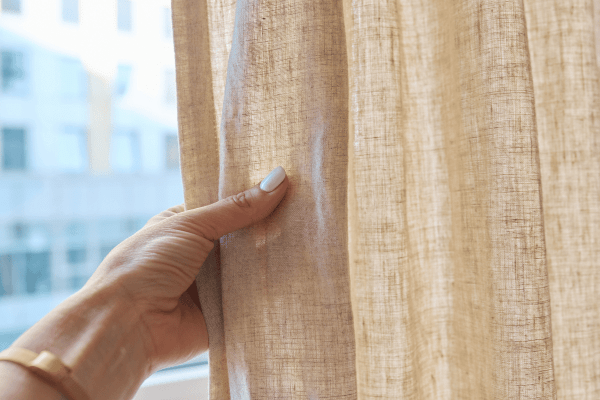
If you want something versatile that works year-round, medium-weight fabrics are your best bet. Cotton and linen blends hang well, let some light filter through when drawn, and come in an enormous range of colours and prints. Jacquard fabrics add subtle pattern and texture without overwhelming the room.
These fabrics suit virtually any curtain style, from pencil pleat to eyelet, and they’re generally easier to maintain than heavier options.
Sheer and Lightweight Fabrics: Voile, Muslin, and Chiffon
Sheer curtains are a beautiful choice for bay windows where you want to maintain the view and let natural light flood in while still softening the window. Voile and muslin curtains create a romantic, airy feel that’s particularly lovely in bedrooms and south-facing living rooms.
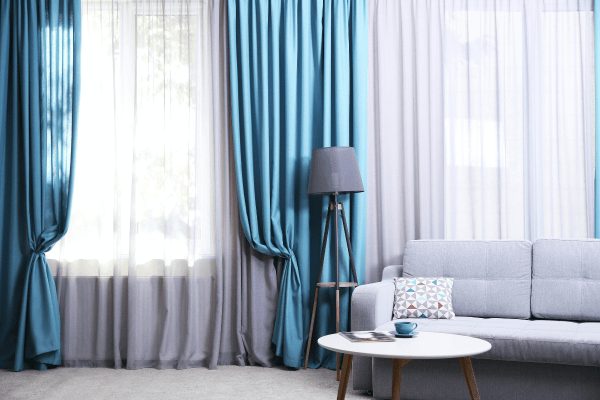
Lots of homeowners layer sheers with heavier curtains, using the sheers during the day for a gentle filter and drawing the main curtains in the evening for privacy and warmth. It’s a practical combination that also looks incredibly elegant.
Lined vs. Unlined
Lining makes a significant difference. Thermal lining keeps rooms warmer and reduces energy costs. Blackout lining is ideal for bedrooms, blocking virtually all light for better sleep. Even a basic cotton lining improves how curtains hang, giving them more body and a more professional finish. If you’re interested in the broader picture of how energy-efficient windows and glazing work alongside curtains, the Energy Saving Trust has excellent guidance.
For bay windows, we’d almost always recommend some form of lining, purely because of the larger surface area and the extra light exposure.
What Colour and Pattern Choices Work Best for Bay Window Curtains?
Colour and pattern can transform the entire feel of a room, and when you’re dressing a bay window, the stakes are higher because the curtains cover a large area. Here’s how to get it right.
Neutral Tones for Timeless Elegance
Soft whites, creams, warm greys, and muted taupes are safe bets that age well. They work in almost any interior scheme and let other elements in the room take centre stage. Neutral curtains also tend to make rooms feel larger and airier, which is useful if your bay window room is on the smaller side.
Bold and Deep Colours
If you want your bay window to make a statement, consider rich colours like navy, emerald green, deep burgundy, or burnt ochre. These shades work particularly well in larger rooms and pair beautifully with heavier fabrics and pinch pleat styles. They’re bang on trend right now and give a room real depth and character.
Patterns and Prints
Florals, geometric prints, stripes, and abstract designs all have their place. The key is scale. Large-scale patterns work best on bigger bay windows where the fabric has room to “breathe” and the pattern can be appreciated. Smaller prints suit more modest windows and add interest without overwhelming the space.
One tip: if your room already has a lot going on with patterned wallpaper, busy upholstery, or statement rugs, keep the curtains simpler. Let one element be the star.
Trending in 2026
Right now, we’re seeing a lot of interest in earthy, nature-inspired tones. Think warm terracotta, sage green, soft clay, and sandy beige. Textured fabrics like boucle and raw linen are also having a moment, adding tactile interest even in plain colours. Colour-blocking (pairing two complementary tones in a single curtain panel) is another trend gaining traction, particularly in more design-forward homes.
How Do You Measure Curtains for Bay Windows Correctly?
Getting the measurements right is absolutely essential. Even the most gorgeous curtains will look wrong if they don’t fit properly. Here’s a step-by-step approach to measuring curtains for bay windows.
Step 1: Identify Your Bay Window Type
Before you do anything else, work out what type of bay you’re dealing with. Is it a box bay with sharp right angles? An angled bay at 30 or 45 degrees? Or a bow window with a gentle curve? This determines the type of curtain track or pole you’ll need and how many separate curtain panels you should plan for.
Step 2: Measure Each Section’s Width
Using a metal tape measure (fabric measures can stretch and give inaccurate readings), measure the width of each individual section of the bay. Write each measurement down separately. If you’re using a continuous curtain track, you’ll also want to measure the total span from one end of the bay to the other.
Step 3: Determine the Drop
The “drop” is the length of your curtains. Measure from where the track or pole will sit to your chosen endpoint. The three standard options are sill length (ending at the window sill), below sill (dropping 10 to 15 centimetres below), and floor length (reaching the floor with a 1 to 2 centimetre clearance, or pooling slightly for a more dramatic effect).
Floor-length curtains tend to look best on bay windows, particularly in living rooms and bedrooms. They create a sense of height and elegance that shorter curtains can’t match.
Step 4: Account for Fullness
Curtains need to be wider than the window to create those pleasing folds when drawn. As a general rule, aim for fabric that’s two to two-and-a-half times the width of the window section for pleated styles. Eyelet curtains need slightly less, around one-and-a-half to two times the width.
Step 5: Check for Obstructions
Check whether there are radiators, window seats, or furniture in the bay that could interfere with how the curtains hang. If you’ve got a radiator beneath the window, you might want to consider sill-length curtains for that section, or tuck the curtains behind the radiator (though this does reduce their thermal effectiveness).
If you’re not confident measuring yourself, it’s worth getting a professional to do it. A small error at this stage can lead to curtains that bunch, gap, or sit at awkward lengths, and nobody wants that.
What Curtain Tracks and Poles Work Best for Bay Windows?
Your choice of curtain hardware matters just as much as the curtains themselves. Bay windows need tracks or poles that accommodate their unique shapes, and not all products on the market are up to the job.
Flexible Curtain Tracks
Flexible curtain tracks are probably the most popular choice for bay windows, and for good reason. They can be bent to follow the exact angles or curves of your bay, creating a smooth, continuous run from one side to the other. They’re discreet (most tuck neatly behind a pelmet or into the ceiling recess) and they work well with pencil pleat and pinch pleat curtains.
If you’re opting for motorised curtains, a flexible motorised track is the way to go. It combines the adaptability of a bendable track with the convenience of automated operation.
Bay Window Curtain Poles
Curtain poles are more of a decorative feature in their own right. Bay window pole systems use corner joints or passing brackets to navigate the angles, and they come in a wide range of finishes, from brushed chrome and brass to matt black and natural wood.
Poles work best with eyelet curtains and can look really striking as part of the overall window dressing. Just make sure the pole system you choose is specifically designed for bay windows; standard straight poles with bodged corner brackets never look right.
Ceiling-Fixed vs. Wall-Fixed
Most bay window tracks and poles are fixed to the wall above the window, but ceiling-fixing is another option worth considering, particularly if you want to create the illusion of taller ceilings or if your window frame leaves limited space for wall brackets. Ceiling-fixed tracks also tend to sit more neatly in the bay recess.
What Are the Best Installation Tips for Bay Window Curtains?
Installing curtains on bay windows takes a bit more thought than hanging them on a standard flat window. Here are the practical tips that’ll save you time and frustration.
Start by making sure your brackets are fixed into solid material. Bay window walls can sometimes be thinner or differently constructed than the main walls of the house, so use appropriate fixings. If you’re drilling into plasterboard, use specialist plasterboard anchors rather than standard rawlplugs.
Hang your track or pole before the curtains arrive, so you can check it sits level and operates smoothly without the weight of fabric pulling on it. Use a spirit level, not your eye, because bay windows can play tricks with perspective.
When hanging the curtains, start from the centre of the bay and work outward. This ensures even distribution of fabric across all sections and reduces the risk of bunching or gaps at the corners.
For heavier curtains, double up on brackets. Bay window curtains often carry more weight than standard curtains, especially in wider bays with generous fabric fullness, and you don’t want the track or pole sagging under the load.
If you’ve opted for motorised curtains, have the electrics sorted before installation day. You’ll need a power point nearby (or a rechargeable battery unit, which some modern systems offer) and you’ll want to pair the remote or app control with the motor before the curtains are hung.
What Bay Window Curtain Trends and Ideas Are Popular Right Now?
Interior trends move fast, but some of the current ideas around bay window dressing have real staying power.
Layered Window Treatments
Layering is one of the strongest trends we’re seeing. Combining sheer curtains with heavier drapes gives you the best of both worlds: light and privacy control, with a rich, textured look that adds depth to the room. Some homeowners are also layering curtains with blinds or shutters within the bay, creating a multi-functional setup that works through every season.
Natural and Sustainable Fabrics
There’s growing demand for curtains made from organic cotton, sustainably sourced linen, and recycled polyester. This reflects a broader shift toward eco-conscious home design, and it’s particularly popular among homeowners who want their interiors to feel considered and responsible. Natural fabrics also tend to age beautifully, developing a soft, lived-in quality over time.
Smart Home Integration
Motorised curtains linked to smart home systems are no longer a niche luxury. More and more homeowners across South Wales are integrating their bay window curtains with platforms like Apple HomeKit, Google Home, and Amazon Alexa. You can set schedules, trigger curtains with sunrise and sunset, and even control them remotely when you’re away. It’s practical, energy-efficient, and surprisingly affordable compared to a few years ago.
Statement Headings and Pelmets
Decorative pelmets and valances are making a comeback. A well-designed pelmet adds an extra layer of visual interest to your bay window curtains, hides the track or pole, and gives the whole arrangement a finished, professional look. Upholstered pelmets in a contrasting fabric to the curtains are particularly popular this year.
What Mistakes Should You Avoid When Choosing Curtains for Bay Windows?
Even with the best intentions, there are some common pitfalls that can trip you up. Here’s what to watch out for.
Buying curtains that are too narrow is probably the single most common mistake. Because bay windows span a wider area than you might expect, it’s easy to underestimate the fabric you need. Always measure carefully and account for fullness.
Choosing style over function is another one. Those ultra-lightweight sheers might look gorgeous in a magazine, but if your bay window faces north and you’re battling draughts every winter, you need something with more substance. Think about what the curtains actually need to do for you, not just how they look.
Ignoring the hardware is a costly error too. Cheap curtain tracks that can’t handle the angles of a bay window will sag, jam, and look terrible within months. Invest in quality tracks or poles designed specifically for bay windows.
Skipping professional measuring can also cause problems. A centimetre off on each section adds up fast, and you can end up with curtains that don’t quite meet in the middle or that puddle unevenly on the floor.
And finally, forgetting about access. If your bay window has sash mechanisms, trickle vents, or opening casements, make sure your curtains don’t block them. There’s nothing more annoying than having to wrestle with fabric every time you want to open a window.
Frequently Asked Questions About Curtains for Bay Windows
Can you use regular curtains on a bay window?
Technically, yes, but they rarely look right. Standard curtains are designed for flat windows and don’t accommodate the angles and depth of a bay. You’ll get a much better result with curtains specifically measured and made for your bay window’s dimensions, hung on appropriate bay window tracks or poles.
Are curtain tracks or poles better for bay windows?
It depends on the look you’re going for. Flexible curtain tracks are more versatile and work with most curtain styles, especially pencil pleat and pinch pleat. Poles are more decorative and pair well with eyelet curtains. For motorised setups, tracks are usually the better option.
How much do bay window curtains cost?
Costs vary widely depending on fabric, style, lining, and whether you go bespoke or off-the-peg. As a rough guide, a quality set of made-to-measure curtains for a standard three-section bay window in the UK can range from around £400 to £1,500 or more. Motorised options add to the cost, but many homeowners find the convenience well worth the investment.
Should bay window curtains be floor-length?
Floor-length curtains tend to look best on bay windows, creating a sense of height and elegance. Sill-length curtains can work in kitchens or where radiators make floor-length impractical, but for living rooms and bedrooms, going to the floor (or even allowing a slight pool of fabric) is usually the most flattering option.
Can you have motorised curtains on a bay window?
Yes. Motorised curtain systems work well with bay windows when paired with flexible motorised tracks. They’re especially useful for wide or hard-to-reach bays, and they integrate with most smart home platforms for automated control.
What’s the best way to clean bay window curtains?
It depends on the fabric. Most lined curtains can be professionally dry cleaned, while some lighter fabrics are machine washable. Regular vacuuming with an upholstery attachment helps keep dust at bay between deeper cleans. Always check the care label before washing.
Do bay window curtains help with insulation?
Absolutely. Thermally lined curtains can make a noticeable difference, particularly in older properties with less efficient glazing. They trap a layer of air between the curtain and the window, reducing heat loss in winter and helping to keep rooms cooler in summer.
Let Our Team Help You Find the Perfect Curtains for Your Bay Windows
Choosing curtains for bay windows is one of those home decisions that’s worth getting right. The right curtains transform a bay window from an awkward architectural challenge into the centrepiece of your room, framing views, controlling light, and adding personality to your space.
Whether you’re drawn to the timeless elegance of pencil pleat curtains, the clean lines of eyelets, the luxury of triple pinch pleats, or the convenience of motorised systems, there’s a solution that fits your home and your lifestyle.
At Solar Sunshades, we’ve been helping homeowners across South Wales dress their windows beautifully since 1978. Our team can visit your home, take precise measurements, guide you through fabric and style options, and handle the full installation. We know bay windows inside and out, and we’re here to make the whole process simple and enjoyable.
Ready to give your bay windows the attention they deserve? Visit our curtains page or call us on 0800 158 8819 to book your free appointment. We’d love to help.